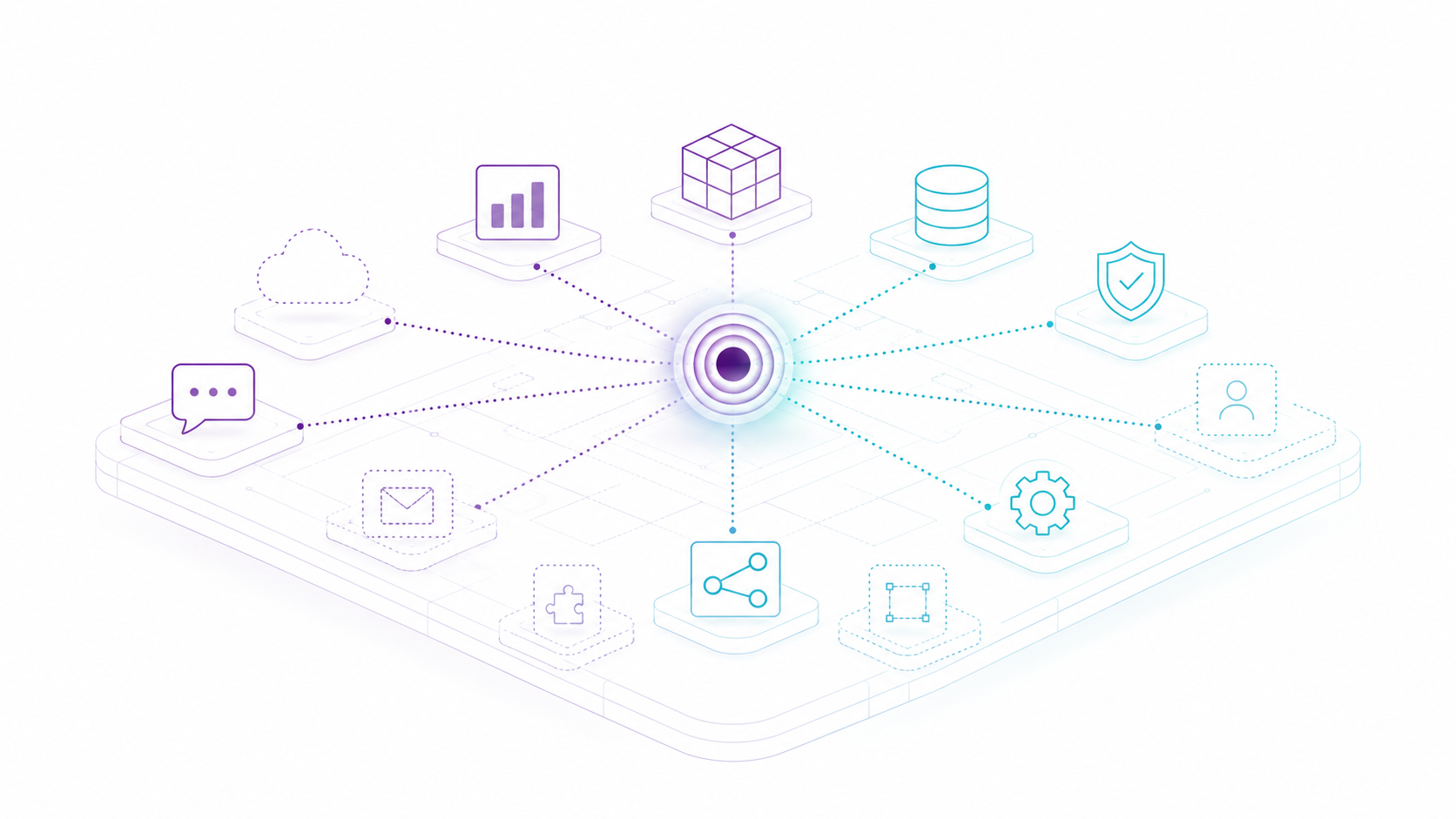
Today we're introducing AIsuru Vibe Coder, the connector (patent pending) with which an AIsuru agent builds its own application by talking with its owner: databases, interfaces, forms, automations and access rules, in the same conversation where they are requested.
In this article we tell you everything: what it does, how it does it step by step, why it never invents a piece of data, how it orchestrates the other connectors in the Suite and the catalog, what testers and customers have already built with it, and what it means for a company that wants to bring agents into real processes.
A conversation that ends with an application
The scene we've seen repeat itself dozens of times over the past few weeks always starts the same way. A person opens their agent's chat and types "let's start." The agent doesn't jump straight into generating code: it asks questions. What is this application for? Who will be able to use it? Who needs to see which data? Only once the answers are in does it get to work. It creates the database, prepares the views and forms, adds the automations. A few minutes later, next to the chat there's a panel with a real application, populated with real data, that works.
The first time we did it in-house, with our team's timesheet tracking. No spec document, no development sprint: a conversation. "I need a timesheet for the team." The agent asked which projects existed, who would enter the hours, who would be able to see everyone else's. Then it created the data schema, a form with the list of projects in a searchable dropdown, timestamps filled in automatically, a tabular timesheet in the panel next to the chat, and a confirmation message after every entry. In the time it takes to have a coffee, the team was already logging hours.
Since then, using the same method, we've seen a CRM with a contact pipeline come to life, a ticketing system with its own public layout, personal archives with covers uploaded via forms, news roundups that update themselves every morning, corporate invoice-approval and document-review workflows. None of these projects required a single line of code written by a human. None required a deployment.
The piece that makes all of this possible is called AIsuru Vibe Coder. It's one of the six original connectors in the AIsuru Suite, and Memori has filed a patent application for industrial invention on its architecture. In one sentence: it's your agent's developer, inside the conversation.
Why agents, until now, weren't enough
To understand what's changing today, we need to be honest about what was missing yesterday. Conversational agents, even the best ones, have three structural limits.
The first: they have no hands. They talk, explain, summarize, but they can't create tools, interfaces, or automations. Every new feature requires a developer, a project, a release. The agent remains an eloquent consultant sitting next to a construction site that never moves.
The second: they hallucinate on data. If you ask a language model "show me the archive," the model doesn't have the archive: it has the ability to generate a plausible table. Plausible, not true. Numbers, dates and relationships can be invented with the same fluency used to write a correct sentence. Fine for a chat; not fine for an invoice, an order, or a work shift.
The third, less often mentioned but decisive: they don't know their own environment. An agent hosted on a platform doesn't know what that platform can do, which capabilities are active, which it could activate. So it can't propose solutions, let alone build them. It can only answer within the perimeter of what it's been told, hoping whoever configured it thought of everything.
The AIsuru Suite was built to overcome all three limits together, and the Vibe Coder is the connector that tackles them at the point where they converge: it gives hands (conversational building), it eliminates data hallucinations (through an architecture, not a prompt), and it presupposes an agent aware of its own environment, one that knows what it has available and what it's missing.
What it is, exactly
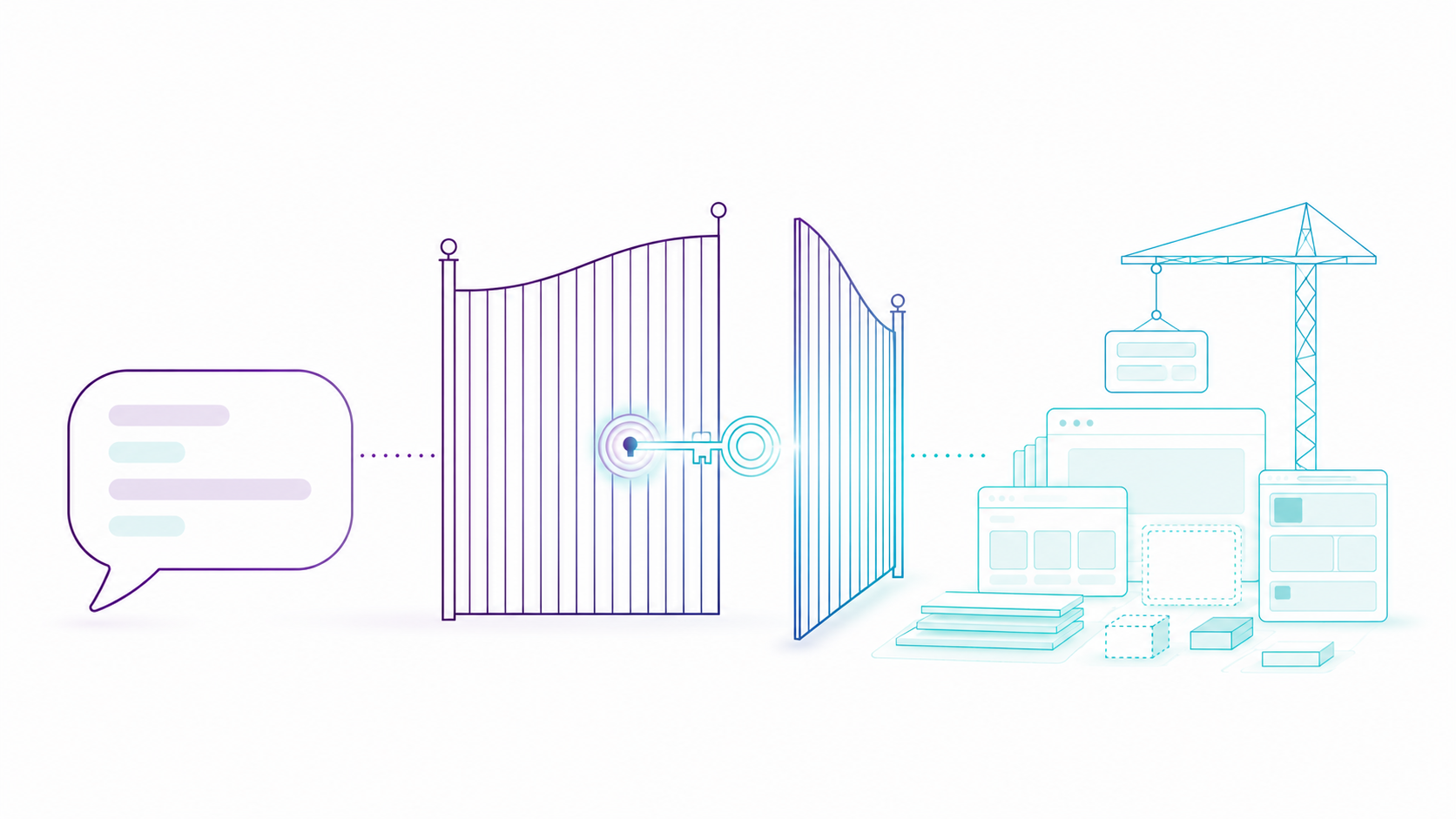
AIsuru Vibe Coder is a connector on the AIsuru platform that gives the agent access to about 45 orchestrated tools to build real applications through conversation. It doesn't generate mockups, it doesn't produce prototypes to be refined: it creates operational, isolated resources, dedicated to that agent. Its own database. Its own views. Its own forms. Its own automations. Its own governance rules. Its own audit log.
And it does so with no deployment. An agent's application isn't a software project to be released: it's a set of resources that come into being in seconds, in the very conversation where they're requested. This has a practical consequence that anyone who manages infrastructure will appreciate: thousands of agents can live on the same platform, each with its own isolated application, and every runtime improvement applies to all of them, instantly.
It's activated from the AIsuru connector catalog with a click, like all the others. From that moment on, all you have to do is type "let's start."
The build journey, step by step
Rules first: governance onboarding
Anyone who's tried vibe coding with developer tools knows the feeling: you move fast, and precisely because of that you can move fast in the wrong direction. For a company, the risk isn't aesthetic, it's a governance risk: who can build? Who sees the data others have entered? What happens if the agent modifies something it shouldn't have?
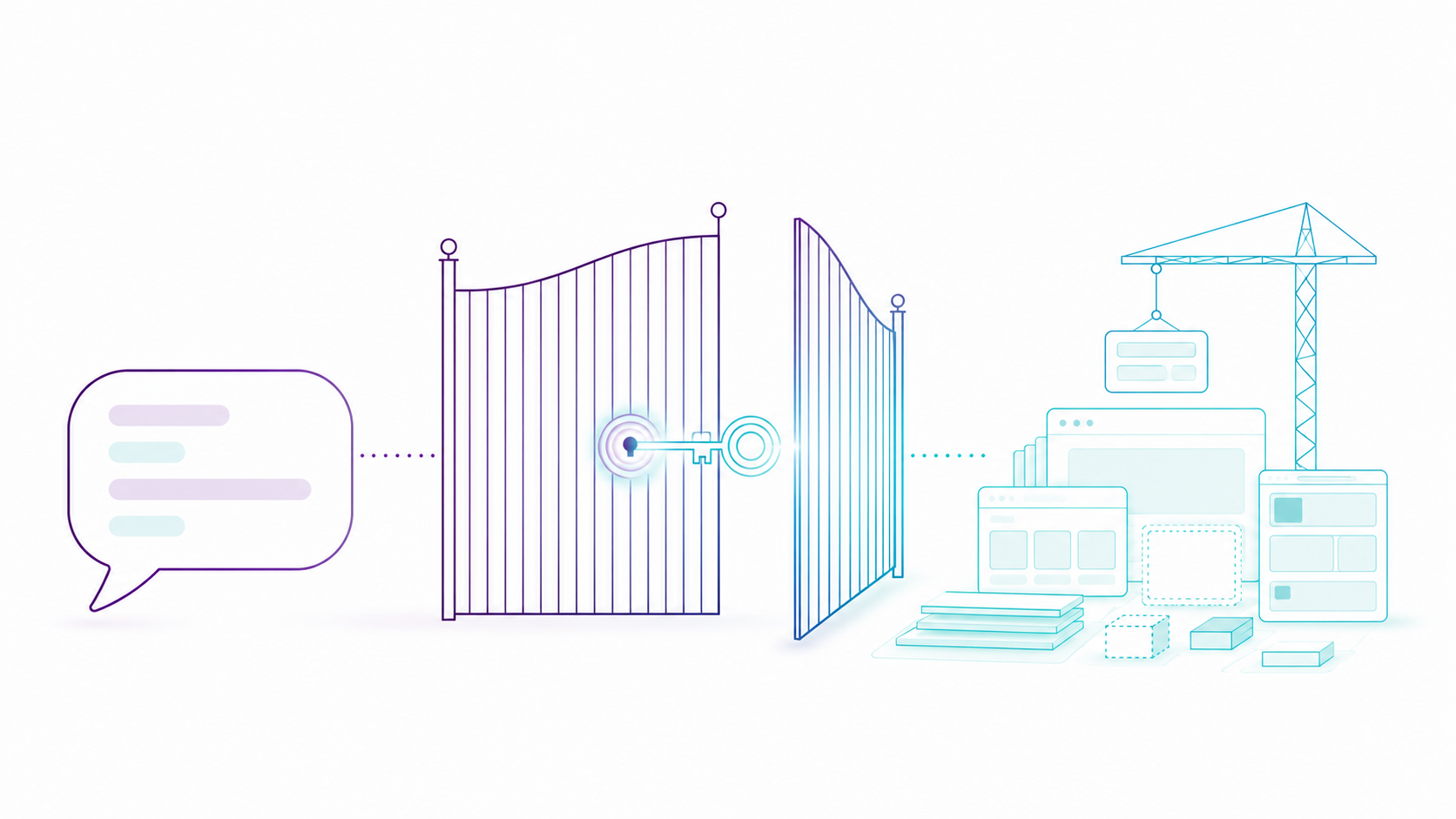
That's why the Vibe Coder starts with the rules, not the code. The first questions the agent asks the owner are meant to establish the purpose of the application, who has permission to build, and who has visibility over which data. And until those answers exist, a precise posture applies, known in the field as default-deny: no building by end users, no visibility into other people's data. Permission is the exception to be granted, not the starting condition to be revoked.
There's also a non-negotiable separation of roles: actions that modify the agent itself, its prompt, its functions, its application, are reserved for the owner. An end user uses the application; they don't rewrite it.
The database that starts empty
When the build begins, the first resource is structured memory: a dedicated, isolated database for the agent, provided by AIsuru Persistence. It starts empty. It's populated only through interaction: chat, forms, automations. Collections are created dynamically as the conversation surfaces the domain's entities (projects, customers, tickets, covers), with no migrations to write and no schema to design on paper beforehand.
It's a reversal of the traditional method worth underlining: normally you design the schema first and then hope the real work adapts to it. Here the schema emerges from the real work, and as the domain grows, so does the schema, in conversation.
Views and the app panel
Data without interfaces is a warehouse with no doors. The Vibe Coder creates views: tables, visual cards, calendars, metrics. They live in an app panel next to the chat, resizable, usable from mobile too, and brandable in a single operation: colors, logo, tone of voice. A personal archive's application can have the aesthetic of whoever wanted it; a company's, the company's identity.
And there's a detail that people in our line of work particularly like: the agent can drive the interface. While answering in chat, it can issue invisible commands that update a view or switch tabs in the panel. Enter data by talking, and the table next to it updates. The conversation and the application aren't two separate worlds: they're the same thing seen from two sides.
Smart forms
For data entered by people, the Vibe Coder generates forms with fields derived automatically from the schemas: searchable dropdowns for linked entities, timestamps filled in automatically, image and document uploads that land directly in the views, like the covers of an archive or the attachments of a case file. And the data is filtered by the logged-in user: everyone sees their own, according to the rules decided during onboarding.
Forms can also trigger real server-side actions. When a submission needs to set something off in the outside world, the execution happens in the infrastructure, and the necessary secrets never pass through the language model. It's a principle that runs through the whole architecture: the model decides what needs to be done, the infrastructure does it, and the keys stay in the infrastructure.
Automations
An application that only comes alive when someone talks to it is a half application. With AIsuru Scheduler, the Vibe Coder adds recurring or one-off tasks executed on the agent's behalf: the roundup that fills itself in every morning at six, the reminder that fires before every meeting, the report that prepares itself at the end of the week. Tasks are isolated per user and can chain multiple steps. It's the piece that turns a reactive assistant into a proactive collaborator.
Public layouts
Not every application lives inside a private chat. The Vibe Coder can create public layouts with auto-start: anyone arriving from the link finds the application already open and ready, as happened with the ticketing system built by one of our teams, where the customer opens the page, fills out the form, and finds their own tickets in a dedicated tab. And the agent can be embedded via web component inside third-party portals, with the application coming along.
RULE ZERO: never fake data
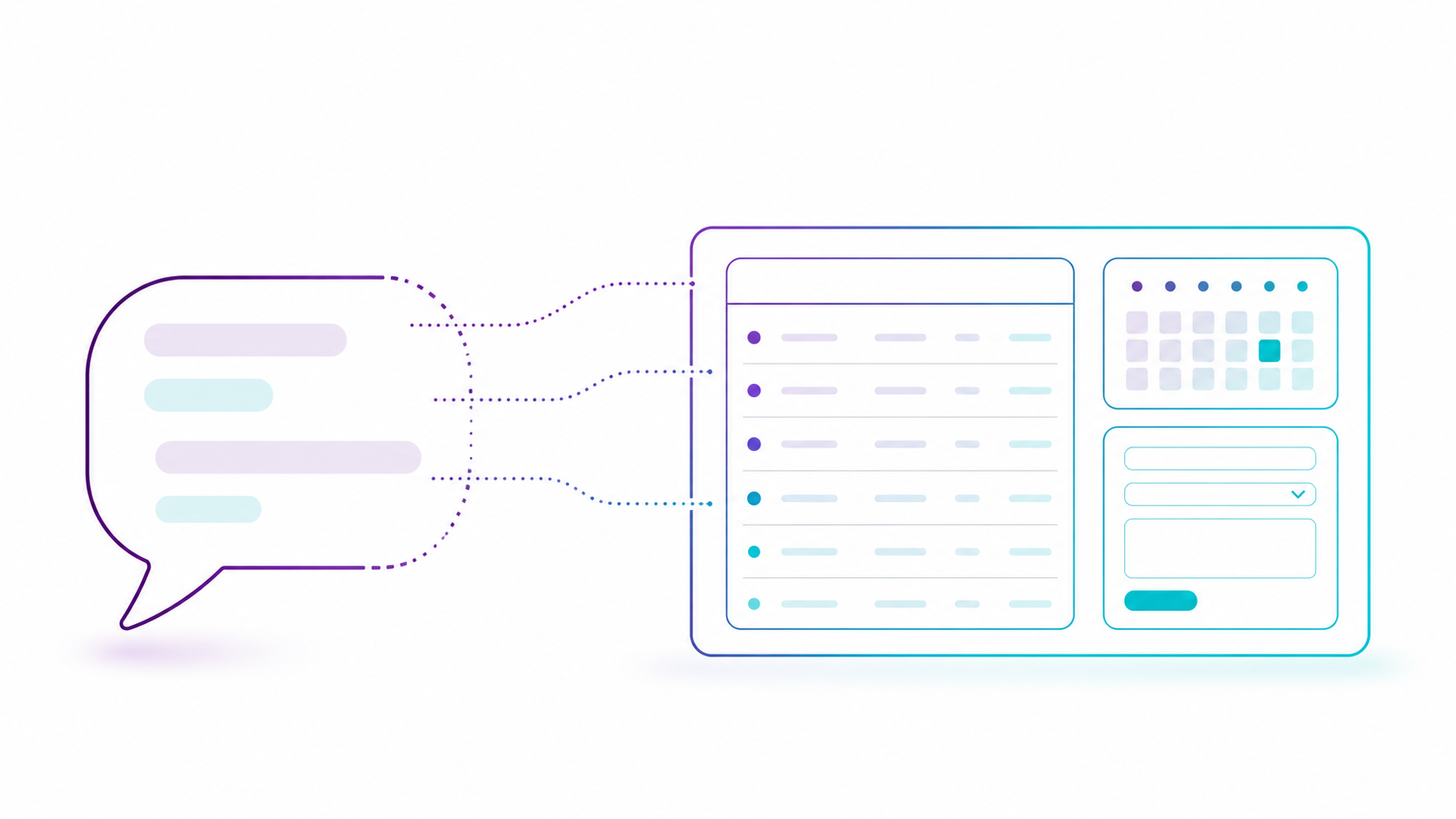
The principle that governs every view, and that we've repeated since day one of development, is brutal in its simplicity: never fake data. In the Vibe Coder, interfaces are never text generated by the model: they are views rendered by the server on the agent's real database, on every load. The model produces specifications, the infrastructure produces the content. If there are 47 customers in Rome, the table says 47. Not "about fifty," not a plausible number: the real one. We call it zero hallucination, and it's not a promise of good behavior: it's an architectural constraint. The model isn't tasked with remembering the data, so it can't get it wrong.
The model must also know the truth
There's also a mirror-image problem that anyone who has integrated language models with data execution knows well: when the system performs an operation on data and shows the result to the user, the model that generated the request normally never finds out. It worked blind.
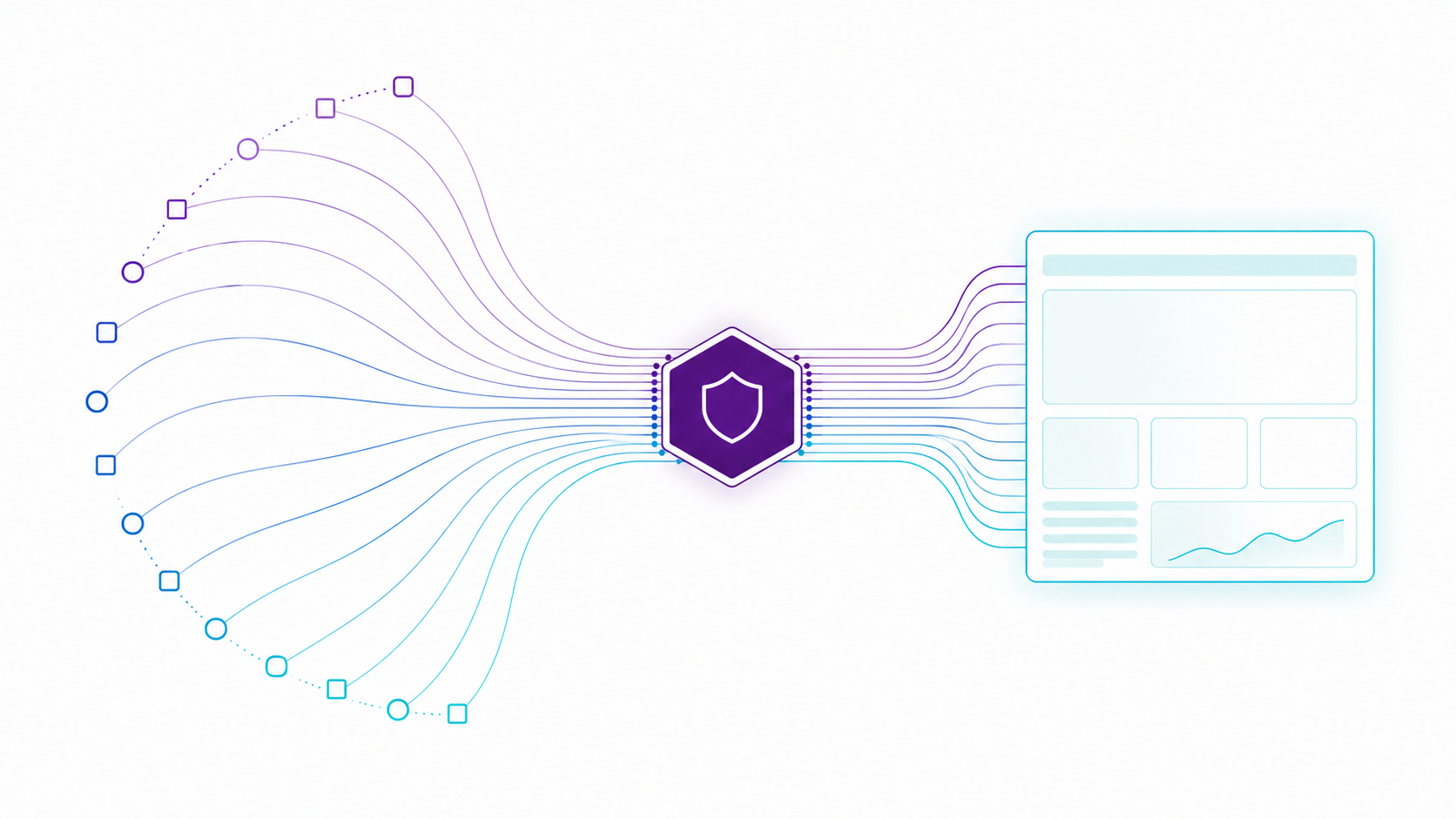
Take the example of the 47 customers. The user asks "how many customers do I have in Rome?", the system performs the operation on real data, the user sees 47. But if the model never received that result, on the next question ("and how many of these ordered this month?") it would reason on assumptions, and could start inventing again. That's why the system works on two channels: the result goes to the user, in a readable, polished form, and it also goes to the model, in structured form, entering its working memory. And when the user explores the interfaces, the dialogue continues: they open a customer's record, and the interface tells the model, passing it that real data invisibly. From that moment on the model knows what data really exists and what the user is looking at, and follow-ups rest on facts, not probabilities. It's the separation between the presentation layer and the context layer: the human receives the presentation, the model receives the structure.
A side benefit: costs and privacy
This architecture has two consequences that are usually only discovered in production. The first concerns costs: views rendered by the server don't pass through the model's context, so a table with thousands of rows doesn't consume tokens and doesn't saturate the context window. The second concerns privacy: views can be filtered per user, and filtered data stays filtered, because it isn't indiscriminately dumped into the model's memory. The model receives what's needed for reasoning, not everything that passes on screen.
The prompt that evolves, but governed
"The prompt modifies itself" is the kind of sentence that, put like that, would make any IT manager jump out of their seat. And that's exactly why, in the Vibe Coder, prompt evolution is governed.
The starting point is that an application built in conversation grows: new entities, new views, new commands, new rules. The agent needs to know this, otherwise from the next inference onward it would behave as if nothing had changed. That's why, at the end of a build, the agent documents itself: it injects into its own prompt what the application does, which views and commands exist, which rules apply. But it does so with a preview, with line-by-line visible diffs, with the ability to undo, and with one precise guarantee: instructions written by the owner are never touched. The owner remains the author of their own rules; the agent only updates the part that describes the application.
And every change, whether to content, functions, views or the prompt, ends up in a log with its own diff, and can be rolled back. Building in conversation doesn't mean building without memory: it means building with an audit trail more readable than that of many traditional projects.
The agent knows where it lives
The Vibe Coder alone, however, wouldn't be enough to explain what we see happening in these conversations. The difference comes from an idea that runs through the entire AIsuru Suite: the agent knows the platform it lives on. On every inference it receives an up-to-date operating manual with the capabilities it has active and, even more useful, with the ones it's missing. If you ask for something that requires a piece not yet active, instead of pretending, it offers to activate it. "To send you the summary every morning I need the scheduler: shall I turn it on?"
This is where the Vibe Coder stops being an application generator and becomes an orchestrator. It doesn't work alone. It activates and coordinates the Suite's other connectors: Persistence for data, Scheduler for automations, Data Analysis when aggregations and calculations actually done on the data are needed, not "from memory" by the model. And it activates the MCP catalog connectors when the application needs to talk to the outside world: mail, documents, the ERP, internal APIs. Including the tenant's enterprise schemas — that is, the connectors already pre-configured by the company with its own credentials — which the agent prefers when they exist: if the company already has its "corporate SharePoint" ready, the agent uses that one, it doesn't improvise its own.
This is our vision of orchestrator agents, and the reason we insist so much on awareness: an agent can orchestrate its own infrastructure only if it knows where it's moving. It knows what exists, it knows what's missing, it knows what's allowed. The opposite of improvisation.
One gateway, governed
All of this orchestration passes through a single point: the AIsuru MCP gateway, the component that gives agents access to the outside world and applies the same rules to every call, from any connector.
The gateway governs identity: personal connectors, such as Outlook, SharePoint, Google Workspace, ClickUp or Microsoft's new Work IQ, use individual login, so each user only sees what their account can see, and the agent inherits the limits of the person it's working for, without bypassing them. It governs credentials, encrypted and never exposed to the model. It governs transparency: every connector has a public information page and a dedicated privacy policy. And it governs the audit trail: executions are tracked, Vibe Coder builds are logged with diffs and the ability to undo.
The catalog today counts 33 connectors that can be activated in one click. The Microsoft world, with Outlook (including shared mailboxes and reading attachments, with text extraction from PDFs and image analysis), SharePoint in application mode or with per-user corporate login, Word and Excel, Dynamics 365 and Work IQ. The full Google Workspace: Docs, Sheets, Slides, Drive, Calendar, Gmail. Productivity tools like ClickUp, Monday.com and Linear. Databases: PostgreSQL, MySQL, SQL Server, MongoDB, Firebird, including the legacy ERPs that, in Italian companies, are often the real heart of the data. Content and the web: Ghost CMS, Wikipedia, page retrieval, image generation, web search that the agent can trigger on its own. The business world, with Salesforce, n8n, Zapier and the generic OAuth/API connector with which any corporate REST API can be connected, even one described via OpenAPI, without writing an MCP server. And frontier experiments, like the official connector for an exchange for assisted trading, where every order requires the user's explicit confirmation.
The point isn't the length of the list. It's that for the Vibe Coder every item in the catalog is an available building block: the application born in conversation can read invoices from a shared mailbox, archive documents, query the ERP, publish content. With the right identities, within the right rules.
Agents talking to agents, agents becoming services
Two connectors in the Suite complete the picture and open up the part we're most excited about for the coming months.
With AIsuru Network, an agent can consult another AIsuru agent: search its knowledge, ask it a question, report back the answer. It's the basis for collaboration between specialized agents: the administration agent that queries the warehouse agent, the personal assistant that asks the product expert.
With AIsuru Agent Link, the movement is reversed: every agent can be exposed as a standard MCP server, reachable by Claude, by Cursor, by other agents, by any compatible client, with separate tokens for consumption and for administration. The application built in conversation with the Vibe Coder can thus enter the toolchain of your customers and partners. Your agent is no longer just a conversation partner: it's a service.
What they've really built
The projects we mention aren't demos prepared for the launch: they were born during testing, some for fun and some for work, and the most serious ones are already in production.
The TimeTracker is our team's timesheet, the one from the opening scene: forms with searchable project dropdowns, automatic timestamps, timesheet next to the chat. The internal CRM was born with full governance onboarding, contact pipeline, and per-user filtered views. The ticketing system has the public layout with auto-start: the customer opens the link, fills it out, and finds their own tickets in the "My tickets" tab.
Then there are the testers' projects, which taught us how general the mechanism really is. A personal anime archive with covers uploaded via forms, visual cards and entries enriched by web searches the agent triggers on its own, all with a custom brand. A to-do list with a calendar view and a panel taking up half the screen. A daily AI news roundup, populated every night by an automation, with a table of links to the sources.
And the corporate workflows. The team's meeting log, with automatic email reminders before every meeting and deduplication of alerts. Document review on protected corporate templates, with case status tracked in Persistence. Invoice approval for an enterprise customer: the agent reads the attachments arriving in a shared mailbox, extracts text from PDFs, and feeds the approval flow. Training certifications managed by an agent with corporate login, embedded via web component in another organization's portal. And a trading-assistance experiment that reads balances and markets, proposes trades, and executes them only after explicit confirmation.
The variety is the point. We haven't built a CRM template or a ticketing template: we've built the mechanism by which the right application emerges from the conversation with whoever will use it.
For businesses: trust is a requirement, not a feature
If you work in a structured organization, you've probably read this far with one question in mind: all very nice, but how do I govern it?
The answer runs through the whole article, and it's worth gathering it here. Governance is default-deny: until the owner defines the rules, no one builds and no one sees anyone else's data. Identities are individual on personal connectors: the agent works with the person's own permissions, not a master key. Credentials are encrypted and never pass through the model. Every change is logged with its own diff and can be undone. Every agent lives with its own database and its own resources, isolated from the others; and where compliance requires even stronger separation, the architecture allows for full application isolation, all the way to dedicated infrastructure per agent. Agents can be embedded in external portals while keeping corporate login. And all of this builds on the compliance path Memori has already established, with ISO certifications — including ISO/IEC 42001 on artificial intelligence management systems — and NIS2 compliance.
There's a simple way to sum up the philosophy: orchestration without governance is the Wild West; governance without orchestration is paralysis. The point of this architecture is to hold both together.
Patent pending
On the architecture that makes all of this possible, Memori has filed a patent application for industrial invention. It's a choice that says something about how we view this work: not one more feature, but a different way of making language models coexist with execution on real data. We won't discuss the contents of the application, for the obvious reasons of any ongoing proceeding: the application will follow its course and will speak for itself in due time. What we can show right away is the result, and it's all in this article — and above all, in a demo.
Frequently asked questions
Do I need to know how to code?
No. The Vibe Coder exists exactly for this: the build happens in conversation, and the onboarding questions are business questions, not technical ones. Those who can code will appreciate what happens underneath; those who can't won't even notice.
Where does my application's data live?
In your agent's own dedicated, isolated database, which starts empty and is populated only through interaction. Not in a database shared with others, not in the model.
Can the agent get a change wrong?
It can propose one, and that's why previews, visible diffs, and undo exist. Every change is logged; every change is reversible. And instructions written by the owner are never touched by automatic prompt evolution.
Can the interfaces show made-up data?
No, by architecture: views are rendered by the server on real data every time they're opened. The model doesn't generate the interfaces' content.
Can I connect my company systems?
Yes, in three ways: with the 33 catalog connectors, with your tenant's pre-configured schemas, or with the generic OAuth/API connector for any corporate REST API, even one described via OpenAPI.
Does it replace developers?
It shifts their time. Operational applications that used to take person-days — logs, workflows, archives — are born in conversation; the people who write software go back to working on problems where software is the product, not the bureaucracy of the process.
How long does it take?
Activation is one click. The first application, from "let's start" to a working panel, is measured in minutes. And it's operational right away, with no deployment.
How to start today
AIsuru Vibe Coder is available today in the AIsuru connector catalog, alongside the other five original Suite connectors: Persistence, Scheduler, Data Analysis, Network and Agent Link. It's activated with one click. Then you open your agent's chat and type "let's start": onboarding does the rest, governance questions included.
If instead you want to see it work on your own processes, with your own data and your own rules, write to us at demo@memori.ai with the subject DEMO SUITE: we'll set up a personalized demo.
An agent that answers is an assistant. An agent that builds, within clear rules and without ever making up a piece of data, is a colleague. As of today, you can hire one.